
Laboratory Countertops: Epoxy, Phenolic & Ceramic Options for Lab Safety & Durability
Choosing the right laboratory countertop is critical for ensuring lab safety, operational efficiency, and long-term cost savings. Laboratory environments demand surfaces that can withstand harsh chemicals, frequent use, and strict hygiene standards.
These are three key requirements that manufacturers engineer epoxy resin, phenolic resin, and ceramic countertops to meet. Labs of all types rely on these surfaces to support daily operations without compromising safety or performance.
Each material offers unique advantages tailored to different lab needs, so you must understand their features, benefits, and ideal applications. In this guide, we break down the top three options to help you make an informed decision for your lab.
Epoxy Resin Countertops: High-Performance Corrosion Resistance
Key Features of Epoxy Resin Countertops
Corrosion-resistant epoxy resin countertops rank among the most versatile and reliable high-performance surfaces for laboratories, chemical workshops, and medical facilities.
Manufacturers design them to thrive in harsh environments, crafting them from high-purity epoxy resin that undergoes rigorous testing to ensure consistent performance.
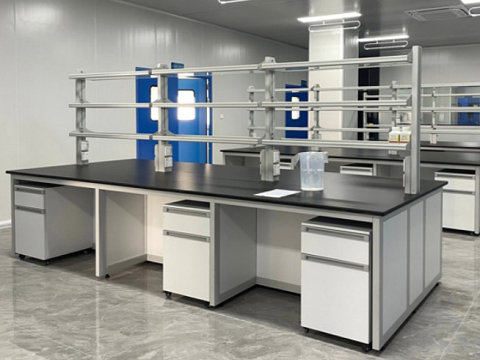
Chemical Resistance & Stability
This material delivers exceptional resistance to acids, alkalis, organic solvents, and salt spray—critical for labs that handle aggressive chemicals daily.
Unlike standard surfaces, they won’t degrade when exposed to common lab reagents like sulfuric acid, sodium hydroxide, or ethanol.
Durability & Hygiene Benefits
Unlike conventional surfaces, they maintain stable performance even in the most challenging chemical environments, resisting deformation, cracking, or damage that could compromise lab safety.
Durability defines epoxy resin countertops. Their hard texture and strong toughness make them highly resistant to impact and wear, ensuring a long service life.
This long service life helps reduce replacement costs over time, which is crucial for labs with tight maintenance budgets.
Additionally, their smooth, non-porous surface simplifies cleaning and sanitization, so they fully comply with strict laboratory hygiene standards.
For labs that prioritize corrosion protection, durability, and reliability, they make an ideal choice, as they’re easy to wipe down with disinfectants.
Phenolic Resin Countertops: Versatile & Cost-Effective
Core Advantages of Phenolic Resin Countertops
Phenolic resin countertops are specialized surfaces engineered specifically for the unique demands of laboratory scenarios.
This is why they rank among the most commonly used lab equipment worldwide, striking a perfect balance between performance and affordability.
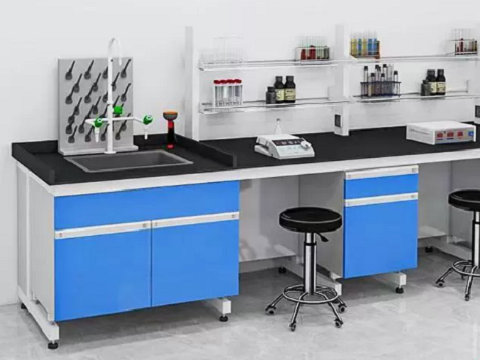
Construction & Strength
Manufacturers construct them from layers of kraft paper infused with phenolic resin, bonding the layers together under high heat and pressure.
This process creates a dense, durable surface that excels in general lab applications, offering superior strength and stability.
Performance & Practicality
One of the primary benefits is their excellent comprehensive performance, including reliable corrosion resistance.
They effectively resist erosion from most commonly used acid-base reagents and organic solvents in laboratories, suitable for general lab work.
They won’t deform or discolor—even with repeated exposure to lab reagents—ensuring a consistent appearance and performance over time.
Their dense texture also provides strong wear and impact resistance, withstanding slight collisions, heavy pressure, and daily experimental rigors.
Hygiene & Ease of Use
Hygiene and ease of use are additional strengths. Their smooth, non-porous surface simplifies cleaning and doesn’t retain stains.
This supports strict lab hygiene protocols, especially important for labs handling biological samples or requiring sterile workspaces.
Furthermore, they are lightweight, easy to install, and offer strong stability, adapting seamlessly to various laboratory operation needs.
From teaching labs to research facilities, they provide a reliable, cost-effective solution for labs seeking practicality and safety.
Ceramic Countertops: Premium Durability for High-Standard Labs
What Makes Lab-Grade Ceramic Countertops Unique
Ceramic countertops are high-performance surfaces specially designed for labs that require top-tier durability, corrosion resistance, and hygiene.
Unlike standard ceramic materials, lab-grade options are crafted to meet the strict demands of professional laboratory environments.
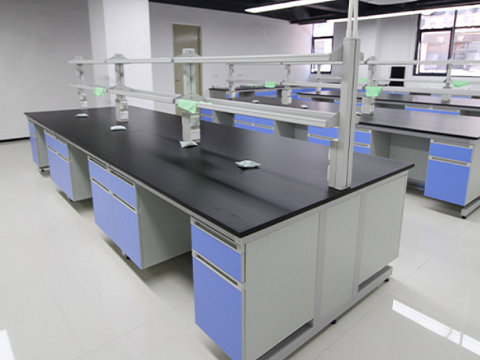
Material & Manufacturing Process
Manufacturers craft lab-grade ceramic surfaces from high-quality minerals like kaolin and feldspar, known for their strength and resistance to extreme conditions.
These minerals are carefully selected to ensure the final product can withstand harsh lab use, from chemical exposure to heavy equipment.
They blend the minerals with specialized glazes and fire them at temperatures exceeding 1250℃. This high-temperature process fuses the glaze and base molecularly.
The result is a permanently stable surface that won’t chip, crack, or degrade over time, combining durability with exceptional performance.
Corrosion Resistance & Hygiene
Exceptional corrosion resistance defines ceramic countertops, letting them effectively resist erosion from acids, alkalis, and organic solvents.
This makes them ideal for labs that handle a wide range of chemicals, from basic reagents to more aggressive substances.
Their dense, smooth, non-porous surface prevents stain retention and bacterial growth, meeting the strictest laboratory hygiene standards.
This is critical for sterile environments like medical labs, microbiology labs, and pharmaceutical research facilities.
Durability & Temperature Resistance
In addition to their hygiene benefits, they are highly impact-resistant and wear-resistant, maintaining a stable shape in high-traffic labs.
They can withstand the weight of large lab equipment, accidental glassware drops, and constant movement without showing wear.
They also excel in high-temperature applications, staying stable when exposed to hot equipment or thermal shock.
This advantage sets them apart from many other lab surface materials, making them essential in high-demand lab scenarios.
How to Choose the Right Countertop for Your Lab
Evaluate Your Lab’s Specific Needs
Selecting the best option depends on your lab’s specific needs, including the type of chemicals used, temperature requirements, traffic volume, and budget.
Every lab has unique demands, so evaluating each material’s strengths against your daily operations is key.
Match Material to Lab Requirements
Epoxy resin works best for labs that handle harsh chemicals and need maximum corrosion resistance. If your lab regularly uses aggressive reagents like strong acids or organic solvents, this is the most reliable choice to prevent damage and ensure safety.
Phenolic resin offers a cost-effective, versatile solution for general lab applications. They are ideal for teaching labs and small research facilities.
They suit labs with moderate chemical use, providing good performance without the higher cost of epoxy or ceramic options.
Prioritize Long-Term Value
No matter which material you choose, investing in a high-quality surface is essential for protecting lab personnel and ensuring experimental accuracy.
It also reduces long-term maintenance costs, enhancing operational efficiency with a reliable daily workspace.
All three options—epoxy, phenolic, and ceramic—deliver the performance and reliability needed for safe, efficient lab operations.
By matching the material to your lab’s needs, you ensure a long-lasting, cost-effective solution that meets all safety and hygiene standards.
About us
ShengStone prodcuts specializes in premium laboratory countertops, covering epoxy resin, phenolic resin (physiochemical board) and ceramic tops. Its epoxy countertops feature exceptional chemical resistance and seamless non-porous surfaces, ideal for harsh lab environments. The cost-effective phenolic countertops balance performance and affordability, suitable for general lab use. Lab-grade ceramic countertops, fired at high temperatures, boast superior durability and heat resistance for high-standard labs. All products meet international certifications, providing reliable, customizable solutions for diverse lab scenarios worldwide.